
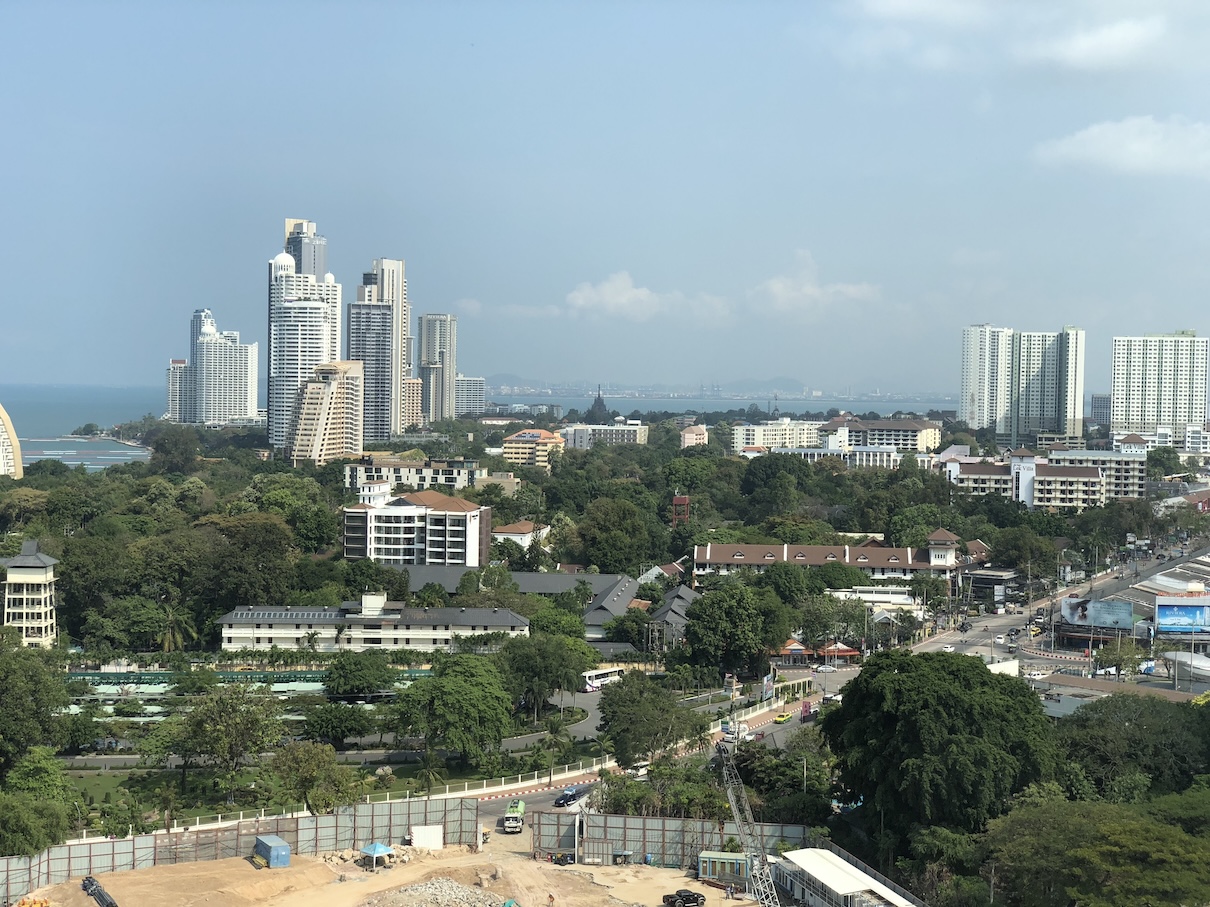
When people talk about property in Thailand, the conversation often slips into emotions: beaches, sunsets, digital nomads, “paradise lifestyle.”
For an investor, that is background noise. What really matters are the numbers: price dynamics, currency, inflation, interest rates, tourism demand and entry ticket size.
In 2026, Thailand quietly checks a lot of rational boxes. Let’s break it down step by step.
1. Property Prices: Slow, Steady, and Real
The first question for any investor is simple: are prices actually growing in real terms?
In Thailand, the answer has been yes for many years:
- The housing price index is trending upward
- Real prices (inflation-adjusted) are in positive territory year after year
This is not a bubble graph with wild spikes and crashes. It looks more like a disciplined, steady uptrend:
- No crazy, speculative overshoot
- No collapse every few years
- Just consistent appreciation over time
For a mid- to long-term investor, this kind of curve is often more attractive than “hot” markets that swing violently. It is easier to sleep when the chart does not look like a heartbeat monitor.
2. Currency: Thai Baht as a Quiet Anchor
Foreign investors are always exposed to one extra risk: FX risk. A great property in a collapsing currency can destroy your returns.
Here Thailand stands out as unusually calm in Asia.
Approximate exchange levels versus the US dollar:
- 5 years ago: ~29.9 THB for $1
- Today: ~31.4 THB for $1
This is not “fixed” or pegged, but the fluctuations are modest. There is no story of the currency halving in value.
What does that mean for you?
- You are not forced to become a part-time FX trader
- Rental income and capital gains are not eaten alive by currency shocks
- Long-term planning becomes easier – especially if your base currency is USD, EUR, CAD or similar
In short, the Thai baht behaves like a quiet anchor, not a wild card.
3. Macro Environment: Low Inflation, Soft Rates, Growing Assets
A market becomes very interesting when several macro pieces line up at the same time. Thailand in 2026 is a good example:
- Inflation: under 1%
- Key interest rate: around 1.5%
You get a rare combination:
- Low inflation – your purchasing power is not being rapidly eroded
- Soft monetary policy – borrowing and credit conditions remain relatively supportive
- Rising asset prices – real estate values continue their steady climb
Typically, you do not get all three at once. In many countries you either have:
- High inflation and high rates
- Or low rates but overheated, bubbly assets
Thailand currently sits in a more balanced zone, which makes it attractive for patient investors.
4. Property Rights: Clear Rules for Foreign Buyers
Another key pillar: can foreigners actually own something real?
In Thailand, the answer is reassuring:
- Foreigners can hold full freehold ownership of many apartments (condominiums), subject to the standard foreign quota rules
- These units can be bought in your own name and inherited and passed down within your family
And importantly:
You do not have to rely on “gray” structures or complicated, risky schemes just to formalize ownership.
For a long-term investor, this clarity is essential. A stable macro backdrop does not help if your legal position as an owner is weak. In Thailand, the legal framework for freehold condos is well established.
5. Phuket: Tourism Engine Behind the Numbers
Now let’s zoom in on one of Thailand’s most important regions for property investors: Phuket.
Tourism here is not just alive – it is growing.
Tourist arrivals
- Tourist flow is up about +23% year-on-year
- Long-term compound annual growth (CAGR) is roughly 7%
That means:
- More flights
- More hotel nights
- More demand for short-term rentals and hospitality assets
Hotel occupancy
Average occupancy across Phuket:
- 2023: ~64%
- 2024: ~69%
Growing occupancy suggests that demand is catching up with (or outpacing) supply. For property investors, this is a healthy sign: tourism is not just recovering, it is stabilizing at higher utilization levels.
Average daily rates (ADR)
Average hotel room price per night in Phuket:
- 2024: around $167
- 2025: already around $180
And remember: these are average figures across the island, not cherry-picked ultra-luxury spots. Rising ADR signals:
- Stronger pricing power
- Better yield potential for well-positioned hospitality and short-term rental projects
6. Local Hotspots: Bang Tao and Kamala
Within Phuket, not all areas move at the same speed. According to Knight Frank data:
- Bang Tao: about +8% price growth over the last year
- Kamala: about +7%
Bang Tao in particular has emerged as a double leader:
- Strong rental yields
- Robust capital appreciation
This combination is rare. Many markets offer either:
- High yield but weak appreciation
- Or strong appreciation with poor rental cashflow
Bang Tao sits in the sweet spot where investors can reasonably expect both ongoing income and growing asset value, provided they pick good projects.
7. Entry Ticket: You Don’t Need Millions
One common objection to international real estate is, “That sounds great, but it is only for big players.”
Thailand challenges that assumption.
Even in a fast-growing area like Bang Tao, there are still projects where:
- Apartments start from around $120,000
That level of entry:
- Is accessible to many mid-level professionals or small investors
- Allows you to diversify internationally without selling everything at home
- Makes it easier to build a portfolio over time rather than all at once
For some, this can be a first step into Asian real estate – a way to learn the market before committing larger capital.
8. Putting It All Together: Why Thailand in 2026 Makes Sense
Let’s recap the puzzle pieces that make Thailand one of the most rational investment stories of 2026:
- Steady, real price growth in housing, without explosion-and-crash dynamics
- Stable currency with limited long-term volatility against the US dollar
- Low inflation and a soft key rate around 1.5%
- Clear property rights for foreign freehold ownership of apartments
- Phuket tourism growth with rising arrivals, occupancy and ADR
- Local hotspots like Bang Tao and Kamala showing healthy capital growth
- Realistic entry prices starting from about $120,000 in strong areas
In other words, this is not a speculative “moonshot” market. It is a structured, data-backed case for diversifying your real estate portfolio into a stable, growing part of Asia.
If you are building a long-term strategy and want exposure beyond Europe or North America, Thailand in 2026 deserves a serious, numbers-first look – especially if you are ready to combine lifestyle value with disciplined, rational investing.


