
How to Choose a Developer Abroad
The “Big Five” Rule in International Real Estate Investing: How to Choose the Right Developer
In international property investing, people rarely lose money because of “obviously stupid” decisions.
Most losses come from something that looks reasonable at the start: buying a great-looking project from the wrong developer. That is how investors end up with long delays, frozen construction, or even complete loss of capital.
After working across different markets, one principle has proven to reduce risk dramatically. I call it the Big Five Rule.
Important clarification: Big Five is not “the 5 biggest developers”
The Big Five Rule is not about picking the five largest companies by volume.
It works like a two-step filter:
- Size is the entry filter: we start only with major, established developers in the market
- The Big Five is the final selection: we then choose the top five by quality, reliability, and investor value among the biggest players
In other words:
- Large developers are the mandatory starting pool
- The Big Five is a precise shortlist of the best within that pool
Why “large” usually beats “small” for income property
Large developers typically have structural advantages that directly affect investor risk and returns.
They usually have:
- More capital and more assets
- Higher credit strength and better access to banking
- Stronger administrative and management capacity
- A broader client base and higher brand recognition
Because of scale and often vertical integration, large developers can also achieve:
- Lower construction costs
- Better installment plans for buyers
- Less dependence on immediate sales to keep building
As a result, their projects tend to be:
- More likely to be delivered on time
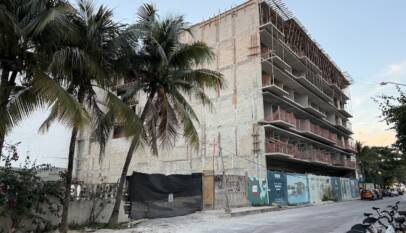
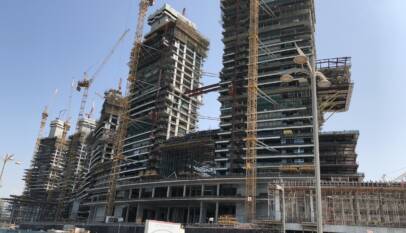
- Less likely to be frozen mid-construction
- More liquid for resale and easier to rent out
Smaller developers often operate “from tranche to tranche.” They depend heavily on the speed of sales, and any disruption can lead to delays or a full stop.
Cost structure and “buffer”: why it matters
Large developers tend to:
- Save costs through scale
- Build repeatable processes
- Control quality through standardized systems
Lower cost base usually means a stronger buffer. That buffer is what protects a project when the market slows down or costs rise unexpectedly.
Access to financing: the real risk divider
This is one of the strongest reasons the Big Five Rule works.
Large developers often have:
- Credit lines
- Bank relationships
- Ability to keep construction moving even when sales slow
Smaller developers often rely almost entirely on buyer payments. If demand drops, cash flow drops, and construction can pause.
The practical conclusion is simple: the risk of an unfinished project is usually much lower with a strong, capital-backed developer.
Survivability in a crisis
Crises happen. The question is not whether the market will always grow. The question is whether the developer can finish the project in a bad period.
Large developers often:
- Cross-finance projects within their portfolio
- Think in 10–20 year horizons
Smaller developers often cannot do this. If sales stop, the project stops.
Location advantage: big developers usually get the best land
Location is often at least half of the investment result.
Large developers tend to:
- Enter stronger locations first
- Plan and shape whole districts and master communities
- Secure land earlier and develop long-term pipelines
Smaller developers often build “where they can,” sometimes on leftover plots that are less attractive for long-term demand.
Liquidity and brand: why resale and rental are easier
Projects from major developers are typically:
- Recognized by brokers and the resale market
- Easier to explain to secondary buyers
- More straightforward to rent out
- Faster to sell later
In many markets, the developer’s brand becomes part of the property’s liquidity.
But not all big developers qualify as “Big Five”
Size alone is not a guarantee of quality.
Even in top markets, some large developers build poorly, and their properties can lose value on resale. Some struggle with deadlines because they run too many projects at once. Others overprice heavily “because of the brand.”
This is why the Big Five shortlist includes only developers who score well across four dimensions at the same time:
- Quality: proven build quality, not just marketing
- Speed: reliable delivery, not constant delays
- Price discipline: brand premium that still makes sense versus the market
- Location logic: projects positioned where demand and growth are realistic
Final takeaway
The Big Five Rule is not about chasing the largest logo. It is about filtering risk before you even choose a building.
Start with size as a safety gate. Then choose the top five by quality, delivery, pricing, and location logic. This approach will not eliminate risk completely, but it removes most of the “avoidable” mistakes that destroy returns in international property investing.
In the next article, we’ll break down how to identify the Big Five developers in a specific market and how to test whether a project truly deserves a place on your shortlist.



How to Get a Language-Friendly Driving Test in Spain
If Spanish test language is your biggest barrier to getting a driving license, DGT has an …